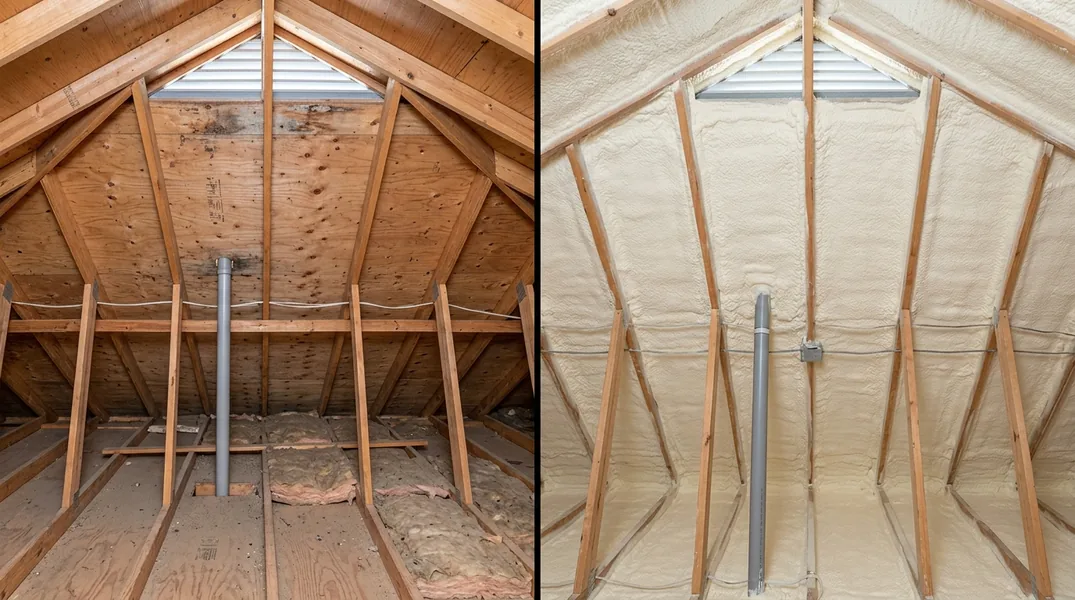
Understanding Spray Foam Attic Insulation: The Basics
When it comes to keeping your Jackson home comfortable and energy-efficient, few upgrades rival the performance of quality Attic Spray Foam Insulation. Unlike traditional fiberglass batts or blown-in cellulose, spray foam creates an air-tight seal that expands to fill every gap, crack, and cavity in your attic space. This comprehensive coverage means fewer air leaks, better temperature control, and lower heating and cooling costs throughout the year.
The decision between open cell and closed cell spray foam is one of the most important choices you'll make when upgrading your attic insulation. Both types offer significant advantages over conventional insulation methods, but they work differently and serve different purposes depending on your home's specific needs, climate conditions, and budget. Understanding the differences between these two options will help you make an informed decision that protects your investment and maximizes your home's energy performance.
What Is Open Cell Spray Foam Insulation?
Open Cell Spray Foam Insulation is a lighter, more flexible foam product that contains cells which are not completely sealed. This structure allows the foam to remain somewhat soft and compressible after it cures. Open cell foam typically has an R-value of approximately 3.5 to 3.6 per inch, which means you need a thicker application to achieve the same thermal resistance as closed cell foam. However, the trade-off is that open cell foam is significantly less expensive than its closed cell counterpart, making it an attractive option for budget-conscious homeowners in Jackson.
One of the key benefits of open cell foam is its vapor permeability. Because the cells are not sealed, moisture vapor can pass through the foam, which can actually help manage humidity in your attic space. This characteristic makes open cell foam particularly suitable for interior applications and attics where moisture control is less of a concern. Additionally, open cell foam provides excellent sound dampening properties, making it ideal if you want to reduce noise transmission through your attic. The lighter density also makes installation easier and faster, which can translate to lower labor costs for your project.
What Is Closed Cell Spray Foam Insulation?
Closed Cell Spray Foam Insulation features cells that are completely sealed and packed tightly together, creating a dense, rigid foam with exceptional insulating properties. This type of foam delivers an R-value of approximately 6.0 to 6.5 per inch, meaning you need only about half the thickness of open cell foam to achieve the same insulation value. For homeowners seeking maximum thermal resistance in a limited space, closed cell foam is the superior choice.
Beyond superior insulation value, closed cell foam acts as a moisture barrier, preventing water vapor from passing through the foam. This makes it an excellent choice for attics in humid climates like Jackson, where summer humidity can be particularly challenging. Closed cell foam also provides structural reinforcement to your roof deck and can increase the rigidity of your attic assembly. Additionally, closed cell foam offers better resistance to air infiltration and is more effective at preventing pest intrusion. While the upfront cost is higher than open cell options, the superior performance and durability often justify the investment for homeowners planning to stay in their homes long-term.
Sealed Attic Insulation: Creating an Unvented Attic Space
One of the most significant benefits of spray foam insulation is the ability to create a sealed attic insulation system, also known as an unvented attic. Traditional vented attics allow air to circulate between your living space and the outdoor environment, which can result in significant energy loss. By contrast, an unvented attic spray foam system seals the attic envelope completely, creating a conditioned space that functions almost like an extension of your home's climate-controlled interior.
This approach offers multiple advantages for Jackson homeowners. First, a sealed attic reduces the workload on your HVAC system, as you're no longer conditioning air that escapes through vents. Second, unvented attic spray foam prevents moisture accumulation that can lead to mold growth and wood rot. Third, by bringing ductwork and HVAC equipment into the conditioned space, you improve their efficiency and reduce losses. Finally, a sealed attic provides additional storage space that remains temperature-controlled year-round. Whether you choose open cell or closed cell foam, the key is ensuring your attic becomes a truly sealed, conditioned part of your home.
Attic Spray Foam Insulation Cost in Jackson: What to Budget
When evaluating spray foam attic insulation options, cost is naturally a primary consideration. Open cell foam typically ranges from $0.50 to $1.00 per board foot, while closed cell foam generally costs between $1.00 and $2.00 per board foot, depending on local market conditions and application complexity. For an average 1,500 square foot attic, you can expect to invest anywhere from $1,500 to $5,000 or more, depending on which foam type you select and the depth of application required to meet your insulation goals.
While closed cell foam carries a higher initial price tag, many homeowners find that the long-term energy savings justify the premium investment. The superior R-value means you need less material to achieve your target insulation level, and the increased durability means your investment will protect your home for decades. To understand the true cost-benefit analysis for your specific situation, we recommend requesting a free estimate from Jackson Spray Foam Insulation. Our team will evaluate your attic, discuss your goals, and provide transparent pricing based on your home's unique requirements. Call us at (601) 519-4413 to schedule your consultation today.
How to Choose Between Open Cell and Closed Cell for Your Jackson Home
Selecting the right foam type depends on several factors specific to your home and situation. If you're primarily concerned with cost and your attic doesn't have significant moisture issues, open cell foam can deliver excellent value and solid insulation performance. Open cell is also the better choice if you want superior sound dampening or if you prefer a more flexible material that's easier to install around irregular shapes and obstacles.
Conversely, if you live in a humid climate like Jackson and want maximum thermal resistance in minimal space, closed cell foam is the superior choice. It's particularly recommended if you have limited attic height, plan to include HVAC equipment in your conditioned attic space, or want the added benefit of moisture protection and structural reinforcement. Closed cell foam is also ideal if you're concerned about pest intrusion or want the longest-lasting insulation solution available.
The best way to determine which option suits your home is to consult with experienced professionals who understand Jackson's climate and building conditions. Jackson Spray Foam Insulation has been helping local homeowners make this decision for years. We'll assess your attic, discuss your priorities, and recommend the foam type that delivers the best balance of performance and value for your specific situation. Reach out to us at (601) 519-4413 or visit our website to schedule your free estimate and take the first step toward a more comfortable, energy-efficient home.
Looking for a professional spray foam insulation contractor in Jackson? Jackson Spray Foam Insulation responds fast for all your spray foam insulation needs.
Get a Free Quote